
Counter-Strike 2 just underwent a significant shift in how we get skins. The Terminal completely replaces the traditional blind loot box formula with a transparent negotiation interface. We depart from the decades old crate and key model, and change it with a direct path to specific skins, provided you are willing to meet the generated price point. This should work on bridging the gap between direct purchasing and randomized drops, fundamentally changing our CS2 economy from the ground up.
How the Terminal system works
The core of this new system revolves around a sequential series of up to five distinct item offers presented by our new in-game arms dealer, Booth. For years, the best CSGO case opening sites have provided tools to review potential rewards and calculate our risks before depositing money. Now, Valve brings that highly requested spirit of transparency straight into the official client.
You can grab a Sealed Terminal, like the Genesis Terminal or the newer Dead Hand Terminal, through your weekly Care Package drops after grinding 5,000 XP, or just by buying one off the Steam Community Market. If you decide to open a Genesis Terminal today, the rules are exactly the same as they were on day one. Whether you unseal a Genesis Terminal or a Dead Hand Terminal, the interface is completely identical.
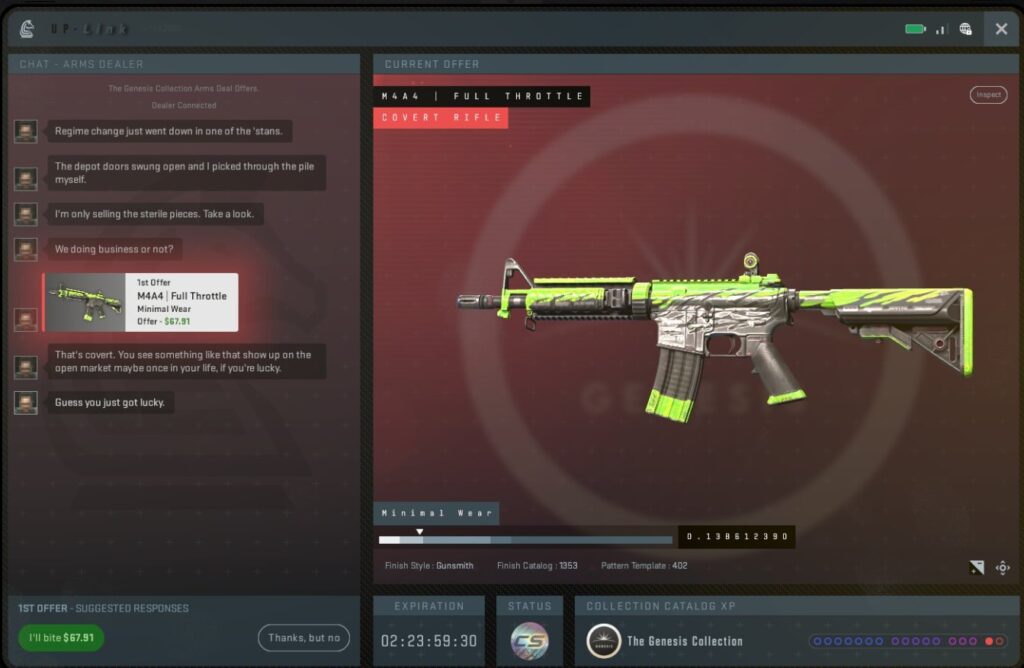
Unsealing the container costs you nothing. Once you open the Terminal, you are staring at a single weapon skin or a pair of gloves, alongside a fixed price in Steam Wallet funds. You get to see the exact wear condition, the finish, and the cost before you spend a single dime.
Here is exactly how the negotiation breaks down:
- Accept the deal: Pay the listed price and the skin goes straight into your inventory.
- Skip the offer: Pass on the current skin to see the next one in line.
- Face the finality: This process is strictly linear and irreversible, meaning once you pass on a skin, it is gone forever.
- Beat the clock: You have a strict 72 hour window to make your choice before the container expires completely.
This setup forces you to really think about value, because you never know if the next offer inside the Terminal will be better. If you decline all five offers, you walk away with absolutely nothing.
Every Genesis Terminal opened proved that players were willing to pay for this certainty, setting the stage for future collections to dominate the market. In a way, this replicates what most CS2 trading sites have done for a while – offer transparency for the buyer, with no gambling aspects of the standard key and loot box options.
The most expensive skins from the Terminal
Recent updates introduced highly sought-after items that carry massive price tags right out of the digital box. Because the internal math inside the Terminal calculates costs based on rarity, float, and StatTrak modules, acquiring a top-tier item requires both a low-probability drop and sufficient funds in your Steam Wallet.
When you open the Dead Hand Terminal, the AWP | Queen’s Gambit and the Glock-18 | Fully Tuned are the primary Covert items. A Factory New StatTrak version of these guns will have Booth asking you for hundreds of dollars on the spot. If you missed out on the initial Genesis Terminal hype, the Dead Hand Terminal brings back that exact same excitement. Collectors still hunt the Genesis Terminal drops for classic finishes, and every Genesis Terminal holds value, but the Dead Hand Terminal is where the current money flows.However, the most statistically rare items inside the Dead Hand Terminal are the gloves. We finally got the first brand new glove finishes since 2020. The most expensive pulls you can get right now from the Terminal are the Sport Gloves | Ultra Violent and the Sport Gloves | Violet Beadwork.
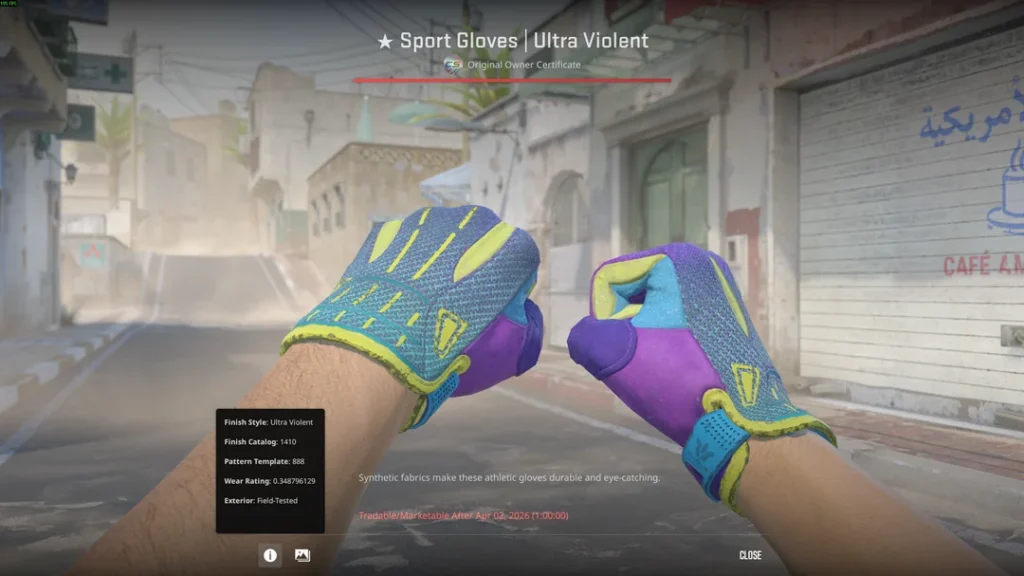
While the game logically caps maximum offers at the $2,000 Steam Wallet limit, a low float pair of Sport Gloves | Ultra Violent will usually set you back between $250 and $750 directly from the Terminal. Once you secure these exclusive items from the Dead Hand Terminal, their secondary market value often shoots way past that initial buy in, making them highly profitable if you can front the cash. The Genesis Terminal showed us similar profit margins back when the first Genesis Terminal dropped, and the Dead Hand Terminal continues that trend.
Why Valve shifted away from traditional cases
Moving away from blind crates is Valve’s way of dodging an increasingly strict global regulatory net. Over the last few years, countries like Belgium and the Netherlands implemented strict legal restrictions on video game loot boxes, basically labeling them as unregulated gambling. By entirely replacing cases with the Terminal, the developers implemented an alternative mechanism.
When you boot up the Genesis Terminal or the Dead Hand Terminal, Valve puts all the purchase information right on the table. You see exactly what you are buying and how much it costs before your wallet even opens. This legally flips the script from a gamble to a standard digital purchase, protecting our game from future government bans. The Genesis Terminal demonstrated that this concept operates effectively at scale.
It solves the legal headaches, but it still keeps that unboxing hype alive. The process of skipping a satisfactory offer in the Terminal because you are hoping for a Covert drop feels exactly like watching a roulette wheel slow down. The Genesis Terminal started the revolution, and the Dead Hand Terminal maintains this structure. We are just looking at a modernized economy now, where the price of flexing is clear, and owning top-tier gear just depends on your willingness to pay the market rate.